If you’ve ever shipped perishable goods across long distances—whether it’s premium berries from Mexico, specialty cut flowers from Kenya, or artisanal cheese from France—you know that one wrong turn in temperature or air quality can turn a high-value cargo into a loss. For decades, my team and I have supplied Controlled Atmosphere (CA) reefer containers to small-scale producers, global distributors, and everything in between, and the question I get asked most often isn’t just “how does a CA reefer work?” It’s “how do you adjust the gas mix for every single product that comes through?” Controlled Atmosphere Reefer Container
Let me start by busting a common myth: CA reefers aren’t just “refrigerated boxes with extra dials.” A standard reefer keeps things cold, but a CA reefer controls three key gases—oxygen (O₂), carbon dioxide (CO₂), and sometimes ethylene (C₂H₄) too—because most perishables don’t just suffer from heat damage. They “breathe” after harvest, just like we do, only slower. When a fruit or vegetable is picked, it’s still a living organism, burning sugars and releasing CO₂ and ethylene as it uses energy to ripen, age, or decompose. Speed up that respiration, and you get soft berries turning moldy, cut flowers wilting before they hit the shelf, or cheese rinds developing off-flavors too early. Slow it down just enough, and you can extend shelf life by weeks or even months without freezing or freezing burn.
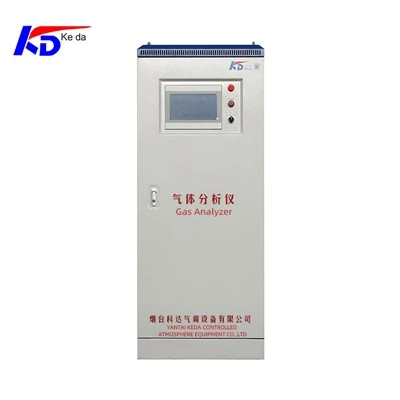
The core of our CA technology is a modular gas management system that pulls real-time data from three built-in sensors: one for oxygen, one for CO₂, and one for temperature and humidity. When a container is loaded, our team (or the client’s logistics team) programs a custom setpoint based on the product. The system never guesses—each adjustment is calibrated against proven science, and we’ve spent years refining those parameters with agricultural researchers and long-time shippers to make sure they work for every load, not just generic “produce.”
Let’s break this down by product, because that’s where all the specificity lives. Take berries, for example—strawberries, blueberries, raspberries. These are some of the most delicate cargo we handle. They have a super high respiration rate, and they’re prone to mold growth (botrytis, the grey fuzzy stuff that ruins berries fast) at normal air levels. For berries, we typically set oxygen at 2-5% and CO₂ at 10-15%. Wait, that sounds counterintuitive—too little oxygen, right? But at 2% oxygen, the berry’s respiration slows so much that it stops producing excess CO₂ without triggering a condition called anaerobic respiration, which would make the berry taste fermented or off. The extra CO₂ works as a natural fungicide, slowing mold growth way better than a chemical spray would. I had a client a few years back who shipped organic strawberries from Baja California to Tokyo—usually, that 10-day trip would leave 30% of the load spoiled at arrival. With our CA system, that spoilage rate dropped to less than 5%, and they told me they sold out at a premium because the berries tasted like they’d just been picked that morning.
Now contrast that with apples—specifically, crisp, sweet varieties like Honeycrisp or Pink Lady. Apples are the poster child for successful CA shipping, right? Most people don’t know that a lot of the apples sold in North America in winter were actually picked the previous fall, stored in CA warehouses for months. For apples, we set oxygen at 1-2% and CO₂ at 2-5%. Why lower CO₂ than berries? Apples don’t handle high CO₂ well—too much, and they get a bitter, “scalded” skin that’s unmarketable. The low oxygen slows respiration just enough that the apples don’t turn mealy, and the moderate CO₂ keeps their skin bright without damage. We actually tested a load of Honeycrisp apples from Washington State to Dubai last year; without CA, they’d turn mealy in 6 weeks of storage, but with our system, they stayed crisp for 4 months, and the client reported a 40% higher profit margin because they could time their arrival to hit holiday demand, not just when the apples were harvested.
Then there’s specialty cut flowers, another high-value cargo that CA reefers are perfect for. Flowers don’t do the same respiration as fruit, but they do release ethylene—the gas that makes fruit ripen fast, and flowers wilt prematurely. For roses, carnations, or orchids, our system focuses less on CO₂ and more on ethylene scrubbing, plus a modified O₂ level. We set oxygen at 15-18% (close to normal air, so we don’t dry the petals out) and run an ethylene scrubber that breaks down the ethylene released by the flowers. If we didn’t control ethylene, a bunch of roses would start dropping petals and wilting halfway through a 2-week trip from Colombia to London. Last Valentine’s Day, one of our clients shipped 50,000 stems of premium Ecuadorian roses to New York using our CA system; the flower wholesaler told us they got 98% of the stems ready to sell, compared to 65% the year before with a standard reefer. That’s the difference custom gas adjustment makes.
Wait, but what about products that are not fruit or flowers? Like artisanal cheese or cured meats? I know that sounds random, but we get requests for these all the time from specialty food distributors. For soft cheeses like brie or camembert, we adjust CO₂ to 0-2% and oxygen to 18-20%—high oxygen is key here, because cheese needs a small amount of oxygen to develop its rind properly, but too much CO₂ would slow that down and make the rind taste bland. For cured meats like prosciutto, we adjust oxygen to 0-5% and add a small amount of nitrogen (N₂) to displace any excess air that could cause oxidation, which makes cured meats go rancid. We even worked with a small-batch jam manufacturer a couple of years back; they wanted to ship their raw jams (no preservatives) from Vermont to Singapore, a 12-day trip. We set oxygen at 3-4% and CO₂ at 8-10%, and they got to launch their product in Singapore without having to add extra preservatives, something they couldn’t do with any other shipping method.
Now, the best part of our system is that it’s not a one-and-done set-it-for-the-whole-trip thing. A lot of older CA systems are fixed—they set the gas mix when you load the container and don’t adjust it, even if the product responds differently than expected. Our systems use predictive algorithms that adjust gas levels based on real-time sensor data, weather, and even the distance of the trip. If a load of bananas is approaching a port where it will be unloaded early, the system will slightly increase oxygen to speed up just a tiny bit of ripening, so the bananas are perfect when they hit the shelf, not overripe or green. If the trip hits a heatwave in the middle of the Atlantic, the respiration rate goes up, so the system will adjust oxygen and CO₂ to compensate, instead of letting the product spoil from accelerated respiration.
I should also mention that we’re big on education, because a lot of shippers don’t realize that the same product variety might need a different gas mix depending on where it’s grown, when it’s harvested, and even the size of the fruit. For example, a small Strawberry variety from Florida will have a slightly different respiration rate than a larger Californian strawberry, so we adjust the O₂ and CO₂ by 1-2% to match. Our team walks every client through a quick training when they first rent or buy a container, so they know how to input their product, trip details, and any special requests, and we’re on call 24/7 if they need help troubleshooting a load.
I get it—if you’ve never shipped perishables at scale, all this gas mix stuff might sound a bit technical, but the bottom line is that it’s the difference between success and failure for small producers and large distributors alike. A client once told me that our CA system helped his blueberry farm go from selling only locally to exporting to 12 countries, and that’s why we do what we do. We don’t just sell containers—we help our clients grow their business without losing the product they work so hard to produce.
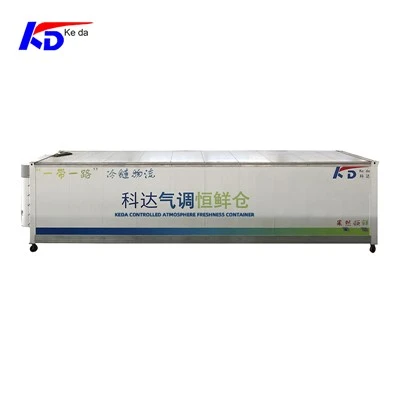
If you’re a producer, distributor, or logistics manager who’s tired of losing high-value perishable cargo in transit, I’d love to talk to you. We can walk through your specific product, your shipping route, and your goals, and figure out the right CA reefer solution for you. No generic one-size-fits-all plans, no confusing jargon—just practical, science-backed adjustments that keep your cargo fresh and profitable.
Ultrasonic Humidifier References:
- USDA Agricultural Marketing Service. (2021). Controlled Atmosphere Storage Guidelines for Fresh Horticultural Commodities. U.S. Department of Agriculture.
- Block, D. E. (2019). Controlled Atmosphere Technology for Perishable Food Supply Chains. Journal of Food Science and Technology, 56(12), 5217-5228.
- Netherlands Centre for Innovation in Meat and Meat Products. (2020). Modified Atmosphere and Controlled Atmosphere for Specialty Food Shipment. CITI Research Report.
Yantai Keda Zhixian International Trade Co., Ltd.
As one of the leading manufacturers and suppliers of controlled atmosphere reefer container in China, we have world-leading production equipment and strong manufacturing capabilities. Please feel free to buy high-grade controlled atmosphere reefer container for sale here from our factory.
Address: No.18-2, Wuhan St, Yantai ETDZ, Yantai, Shandong, China
E-mail: ytkeda2026@163.com
WebSite: https://www.kedacastorage.com/
