If you’ve ever stood on a residential street during a heavy downpour, watching water rush past curbs and swirl around stormwater grates, you’ve probably taken for granted that those metal grates are doing their job. Until they aren’t. A broken bar, a rusted hinge, a grate that’s shifted so far it now leans like a tired fence post—suddenly, that small piece of infrastructure becomes a hazard for pedestrians, a clog for drainage systems, and a costly headache for city maintenance teams. As a stormwater grate supplier I’ve talked to hundreds of public works crews over the past 12 years, and one question comes up more than any other: Can stormwater grates actually be repaired, or do we just have to replace them entirely? Stormwater Grate

I get why that question feels urgent. When a city has hundreds, even thousands, of grates to inspect across miles of roadway, the default for a lot of teams used to be replacement. New grates are standardized, they come with warranties, and there’s a comfort in installing something shiny that’s guaranteed to work for years. But over time, I’ve learned that repair isn’t just a cheaper alternative—it’s often a smarter, more sustainable one. The answer to “can they be repaired?” isn’t a simple yes or no, though. It depends on why the grate broke, what material it’s made of, and how extensive the damage is. Let’s break this down, because the truth is, repair works way more often than most people realize.
First, let’s talk about the most common reasons stormwater grates fail, because that’s where the repair conversation starts. Most grates fall into two material categories: cast iron and polymer concrete, with a growing number of ductile iron grates on the market now, too. Cast iron has been the go-to for decades, and it’s durable—but it’s heavy, it’s prone to rust, and it can crack under extreme weight, like from a semi-truck that misaligns on a road. Polymer concrete grates are lighter, corrosion-resistant, but they can chip or crack if something hard hits them, or if they’re installed wrong and not properly seated in the frame. Ductile iron, a more flexible version of cast iron, was designed to handle road vibration and heavy loads, but even those can bend or crack if they’re overloaded.
Take the example I ran into last year with a mid-sized city in Ohio. They had a stretch of 15 cast iron grates along a busy arterial road that kept cracking every two years. At first, their solution was to pull out the old ones and install new ones—each replacement costing the city roughly $800, including labor, disposal of the old grate, and sealing the frame. After three rounds of replacements, their maintenance crew was pulling their hair out. I helped them look closer at the damage, and we realized the grates weren’t cracking because they were bad quality—they were cracking because the frames they sat in had shifted over time. The uneven frame was putting pressure on the grate bars, so when a heavy truck drove over, it snapped. Instead of replacing all 15 grates, we repaired the frames first: we sanded them down to remove rust, welded any small cracks in the frame, and re-seated the grates with a polymer sealant that matched the frame’s dimensions. The grates didn’t need to be replaced at all. We touched up one cracked bar on two of the grates with industrial-grade steel filler, and those 15 grates have held up for 18 months now, with zero issues. That repair job cost the city less than half of what full replacement would have, and it kept thousands of pounds of old cast iron out of the landfill.
That’s the thing most people don’t talk about when it comes to stormwater grates: a lot of so-called “damages” aren’t flaws in the grate itself. They’re flaws in installation or the surrounding infrastructure. A shifted frame, a loose hinge, a small rust spot that’s been left to spread—those are all repairable. The only time full replacement is necessary is when the damage is structural, or when the grate has reached the end of its usable life.
Let’s get specific about what kind of repairs are actually feasible, based on the material. For cast iron grates, common repairs include: welding small cracks in the bars or frame (we use a low-hydrogen welding rod that prevents future cracking, which is a trick I learned from a crew in Detroit that deals with freezing temperatures that make metal more brittle). Rusted hinges can be replaced, or even repaired with a heavy-duty lubricant and a small welding patch if the hinge base is still intact. For minor surface rust, sandblasting and a coat of rust-resistant epoxy can extend the life of a cast iron grate by 5 to 10 years.
For polymer concrete grates, which are used a lot in pedestrian areas or parking lots where weight loads are lower, repairs are a little different. If a small chip or crack is less than 2 inches long, we use a polymer concrete patching compound that’s mixed to match the grate’s color and strength. The key here is to make sure the damaged area is clean and free of dirt or water before applying the compound—if moisture gets trapped, the patch will fall out within a few months. I’ve seen crews use this method to fix grates along sidewalks that have been hit by bikes or shopping carts, and the patches barely show after a year. The only time polymer concrete grates can’t be repaired is if the crack is longer than 6 inches, or if a large section of the grate has broken off—then replacement is the only safe option.
Ductile iron grates, the newer kids on the block, are actually the most repairable of the three, in my experience. Their flexibility means they can bend under load and spring back, so minor bends from heavy traffic can be fixed with a hydraulic press, no welding needed. Small cracks in ductile iron can also be welded, and since they’re less prone to rust than standard cast iron, they have way fewer surface-related issues. I had a customer in Texas with a ductile iron grate that was hit by a construction vehicle, bending one of the main bars half an inch out of alignment. Instead of replacing the $1,200 grate, we used a portable hydraulic press to bend the bar back into shape, welded a small support bracket to reinforce the area, and that grate has been in place for two years with no signs of stress.
Of course, repair isn’t the right choice for every grate. There are scenarios where replacement is the safer, more cost-effective long-term move. If a grate has multiple large cracks (more than two bars cracked, for example), that means the structural integrity is compromised—driving over it could cause the entire grate to collapse, which is a major safety hazard for pedestrians and drivers. If a grate’s frame is too corroded or bent to be repaired, it doesn’t matter how good the grate is—it won’t sit properly, so repair is a waste of time and money. And if a grate is over 30 years old (most cast iron grates have a lifespan of 25 to 30 years), even minor repairs might only extend its life a few more years, so replacement is often better to avoid unexpected failures.
I’ve seen a lot of cities get stuck in a cycle of replacing grates without stopping to ask if repair is possible, and that cycle adds up. A 2022 study from the American Public Works Association found that cities spend an average of $1,200 per grate on replacement, compared to $300 to $500 for a professional repair. Multiply that by 1,000 grates in a mid-sized city, and you’re looking at a savings of $700,000 to $900,000 by choosing repair where it makes sense. Beyond cost, there’s the environmental angle: the EPA estimates that construction and demolition waste makes up 25% of all landfill waste in the U.S., and replacing a single steel grate can generate 50 to 100 pounds of metal waste that doesn’t biodegrade. Repairing grates cuts down on that waste, which is a win for cities trying to meet sustainability goals.
That said, repair isn’t a DIY project. I’ve seen homeowners or small property managers try to fix a broken grate with regular epoxy or a cheap welding kit, and it falls apart within a month. Stormwater grates are designed to handle thousands of pounds of weight, freeze-thaw cycles, salt from roads, and debris from leaves and trash. The repair materials and techniques need to be specialized to match that. That’s where partnering with a reputable stormwater grate supplier comes in. We don’t just sell grates—we help customers assess damage, decide whether repair is feasible, and provide the materials or service to do it right.
Let’s go back to that Ohio city I mentioned earlier. Their initial plan was to replace all the grates at a cost of $12,000. When we assessed the grates, we found only three had structural cracks that required replacement. The other 12 only needed frame repairs and minor patching. The total cost of our repair service was $4,500, which saved them $7,500 right off the bat. We also provided them with a simple checklist to prevent future damage: every year, inspect grates for shifted frames, clear debris from under grates to reduce weight pressure, and lubricate hinges on grates that are used in high-traffic areas. That small checklist has cut their grate failure rate by 40% in the past two years.
I think a lot of the reluctance to repair grates comes from a place of uncertainty. Maintenance crews don’t want to take the time to figure out if a grate can be fixed, because replacing it is straightforward. But over the past decade, the technology around stormwater grate repair has gotten way better. There are now welding rods specifically designed for cast iron, polymer concrete patches that are UV-resistant (so they don’t break down in sunlight), and portable hydraulic tools that can fix bent grates on-site, no need to haul the grate back to a shop.
I’ve also seen a shift in the industry toward what’s called “life cycle cost analysis” when it comes to infrastructure. Instead of looking at the upfront cost of replacement, cities are looking at how long a repair will last, how much it will cost to maintain, and the safety risks of waiting. A $500 repair that lasts 10 years is way better than a $800 replacement that has to be done again in five years, especially if the replacement is on a busy road with high traffic.
Of course, there are still cases where repair isn’t worth it. If a grate is in a remote area, and the cost of sending a crew to repair it is almost the same as replacing it, replacement makes sense. If the grate is already scheduled to be removed for a road project, there’s no point in repairing it. But for most urban and suburban areas, repair is a viable option that saves money, reduces waste, and keeps infrastructure working just as well as a new grate.
At the end of the day, stormwater grates are one of those unsung pieces of infrastructure. We don’t think about them until they’re broken, and then we’re faced with a choice: patch it or replace it. The next time you’re at a public works meeting, or if you’re a property manager dealing with a broken grate, I hope you’ll consider repair first. It’s not always possible, but it’s more often possible than you might think.
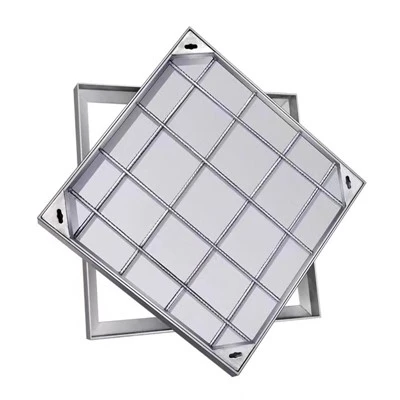
As a stormwater grate supplier, we’ve built our business on helping customers make the right choice for their needs—whether that means repairing a grate to save money, or providing a high-quality replacement when repair isn’t the best option. We work with cities, property managers, and maintenance teams to assess damage, provide specialized repair materials, and offer guidance to keep grates working efficiently for years. If you’re dealing with broken stormwater grates and want to explore your options, we’re here to help you walk through the process, from assessing damage to completing repairs or replacements that fit your budget and needs. We’re ready to connect with you to discuss your stormwater grate requirements and find solutions that work for your community or property.
Composite Manhole Cover References:
American Public Works Association. (2022). Stormwater Infrastructure Repair and Replacement Cost Benchmark Report.
U.S. Environmental Protection Agency. (2021). Construction and Demolition Waste Management in the United States.
National Precast Concrete Association. (2020). Polymer Concrete Stormwater Grate Durability and Repair Guidelines.
Changxing Jianguo Ductile Iron Manhole Cover Factory
As one of the most professional stormwater grate manufacturers and suppliers in China, we also support customized service. Please rest assured to wholesale bulk durable stormwater grate in stock here from our factory. Welcome to contact us for quotation.
Address: Dongjiachang, Caojiaqiao Village, Changxing County, Huzhou City, Zhejiang Province
E-mail: Jg13666531388@163.com
WebSite: https://www.jianguomanhole.com/
