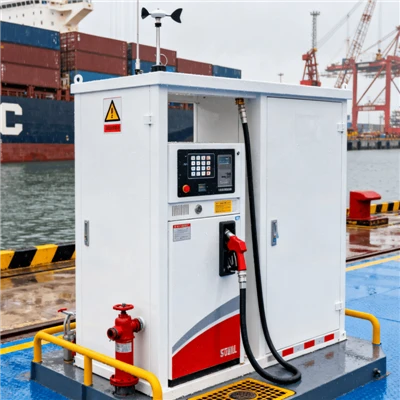
Hey there, I’m Jake, and for the past seven years, I’ve worked side-by-side with my team as a supplier of mobile explosion-proof fuel stations. If you’ve ever helped manage a construction site, a mining operation, or even a fleet of emergency utility vehicles, you know how messy and risky static fueling at remote locations can be. We’ve shipped units to dozens of sites across North America, and one mistake I see new operators make over and over is cutting corners on installation. I get it—you’re busy, you’ve got deadlines to hit, and that unit just arrived on a flatbed and you’re eager to get it up and running. But skip the fine print, and you’re not just risking fines from OSHA or local fire marshals—you’re risking safety, and that’s non-negotiable. Today, I’m breaking down exactly what our customers need to do to install these units right, no shortcuts allowed. Let’s dive in. Mobile Explosion-proof Fuel Station

First, before you even uncrated the fuel station, there’s a critical first step you can’t afford to skip: site characterization. We’ve had a customer out in West Texas try to park our unit in a low-lying ditch right next to a well pad, and within an hour of fueling for the first time, the wind shifted and blew a cloud of diesel fumes right into the drilling crew’s temporary break area. That’s exactly why site selection isn’t just “find a flat spot.” First, you need to check elevation and drainage. No part of the unit should be below the 100-year flood plain level in your area—flood water can get into the fuel compartment, damage wiring, and create a hazardous situation. We always tell customers to check their local FEMA flood maps for that, and if you’re in a high-rainfall area, you might even need to add a temporary sloped layer of gravel under the unit to direct water away from fuel lines and electrical components.
Next, distance is key. The National Fire Protection Association (NFPA) sets clear guidelines here, and we’ve built every our units to meet NFPA 30, which is the standard for flammable and combustible liquids storage. That means at minimum, the fuel station needs to be at least 10 feet away from any ignition source: break rooms, welding equipment, electrical boxes, or any open flame. If you’re working in an area with heavy machinery on site, bump that distance up to 25 feet if at all possible—heavy equipment engines are constant ignition risks, even when they’re idling. Also, you can’t install within 50 feet of a potable water source, like a drinking water well or a municipal hydrant. We had a customer in Colorado put one too close to a hydrant a couple years back, and the local fire marshal shut them down mid-project because of that. Don’t be that guy. And if you’re working in a residential area? Add 10 feet to those minimum distances to account for pedestrian traffic and extra oversight.
Once you’ve got the site picked out, the next big piece is utility connections and grounding—this is where most people mess up, and it’s the most important part for explosion-proof safety. Our mobile fuel stations are self-contained, but they do need a power source for the pump, the vapor recovery system, and the control panel. Most of our customers use a standard 110V grounded outlet, but here’s the catch: it can’t just be any outlet. It needs to be a dedicated, GFCI (Ground Fault Circuit Interrupter) outlet that’s not shared with any other equipment on site. If you plug our unit into the same outlet as a generator or a tool charger, you risk power surges that can damage the explosion-proof switches, and that’s a failure point waiting to happen. Also, the power cord needs to be a heavy-duty, oil-resistant type—no extension cords, no cheap cords that get chewed up by heavy equipment. We provide a 25-foot oil-resistant cord with every unit, and we insist customers don’t add additional length, because extra cord creates more points of wear and more risk of tripping, which can damage wiring.
Grounding is non-negotiable, y’all. Static electricity is the number one cause of small explosions in fueling operations, and that’s why we design our units with a dedicated grounding lug on the frame. You have to connect that lug to a permanent, bonded grounding rod driven at least 8 feet into the ground. Don’t use a temporary stake, and don’t ground to a fence or a piece of heavy machinery—those aren’t proper grounding points. We always recommend using a copper-clad grounding rod, because it’s resistant to corrosion, especially in areas with rocky or high-mineral soil. If you’re in a sandy area, you might need to add a bag of bentonite clay around the rod to help conduct electricity, because sand doesn’t hold a ground well. Every time we train a customer, we make them test the ground with a multimeter before they even connect power—they need to get a reading of less than 25 ohms, which is the NFPA minimum requirement. We’ve had a customer in Wyoming skip that step, and when they tried to fuel a truck with a plastic jerry can, the static spark ignited a small vapor cloud. No one got hurt, but the jerry can melted and they had to pay thousands in cleanup. That’s avoidable.
Now, if you’re planning to fuel off-road vehicles or heavy equipment, you might be thinking about vapor recovery, but here’s the thing: even if your site doesn’t require it by code, our units come with optional vapor recovery systems that are easy to install, and I always recommend them. Unburned fuel vapor isn’t just a pollutant—it’s a huge explosion risk. We had a customer in Alaska turn down vapor recovery once because he thought it was too much work, and when the temperature dropped to -20°F, a small vapor leak from the nozzle built up around the unit overnight, and a stray spark from a frozen heater ignited it. Thank God no one was hurt, but the unit was totaled, and the site had to close for three days. Vapor recovery isn’t just a regulatory box to check—it’s a safety net. If you do install it, make sure the hoses are properly connected with clamps, not just push-fit connections, and that you test the vapor recovery system before you put any fuel in the tank.
Electrical safety doesn’t stop at the power cord and grounding. The control panel, pump, and all switches on our unit are rated Class 1, Division 2, which means they’re designed to not ignite flammable vapors, but you still need to make sure no wires are exposed. After you install the unit, go over every connection: the power cord to the outlet, the grounding lug to the rod, the vapor recovery hoses, and any fuel line fittings. Tighten every fitting until they’re snug, and use Teflon tape on fuel line connections to prevent leaks. Also, label every electrical component with clear, large labels—this makes troubleshooting a lot easier, and it helps any new crew member who might be working on site not make a mistake. We always provide a installation manual with every unit, and we do on-site training for customers who want it—for a small extra fee, we can send one of our techs to walk your crew through the process, and answer any questions they have mid-install. That’s a service we’ve offered since day one, and it’s saved us from a lot of customers making bad calls on their own.
One thing a lot of new customers don’t think about is spill containment. When you’re moving fuel around, spills are going to happen—small ones, anyway. Our units have built-in spill pans, but you need to make sure those pans are cleaned after every fueling, and that there’s no standing water or leftover fuel in them. Also, you need to have a secondary spill containment plan in place, even if the unit has its own. Most local codes require that you have a portable spill kit on site, with absorbent pads and a fire extinguisher rated for Class B fires (flammable liquids). We include a basic spill kit with every unit, but we always tell customers to upgrade to a 5-gallon spill kit, just in case a larger spill happens. Don’t put the spill kit right next to the unit, though—store it at least 10 feet away, where it’s easy to grab in an emergency.
Wait, let’s talk about regulatory compliance, because this is non-negotiable. Every area has different codes, but almost all jurisdictions require that you have the unit inspected before you start using it. We build every our units to meet NFPA 30, OSHA 1910, and the Environmental Protection Agency (EPA) standards for fuel storage, but that doesn’t mean you don’t need to get a local fire marshal or environmental inspector to sign off on the installation. We provide a full set of documentation with every unit, including test reports, compliance certificates, and installation checklists, so you can hand them over to the inspector and make their job easy. We’ve had a couple customers get shut down because they didn’t get the unit inspected, and it delayed their project for weeks. Don’t let that be you.
Now, what about if you’re moving the unit after installation? A lot of our customers use these units for temporary sites—like a construction job that moves every few months—so you might need to relocate it halfway through a project. Before you do that, you need to follow a specific procedure: first, drain all fuel lines and the vapor recovery system, disconnect the power cord and grounding rod, close all valves and lock the unit’s access panels, and make sure there are no leaks. Never move a fuel station that’s full of fuel or has open lines. We always recommend draining the tank to at least 10% capacity before moving it, just to reduce weight and any risk of leaks. Also, when you re-install it at the new site, you have to go through all the same steps again: check elevation, distance from ignition sources, grounding, and get it inspected again at the new location. I’ve seen customers skip that step, thinking it’s the same unit, and get fined $10,000 or more. It’s not worth it.
Let me share a quick success story to drive this all home. A couple years back, we sold a mobile explosion-proof fuel station to a mining operation in northern Ontario. Their old fuel setup was a 500-gallon tank that they parked at random spots around the mine, and they’d had three small incidents of vapor igniting. We walked them through every step: we helped them pick a site that was 25 feet from their mining equipment, drove a proper grounding rod, installed a GFCI outlet, and trained their crew on the installation and safety checks. They’ve used that unit for three years now, no incidents, and they told us it cut their fueling time by 40% because they don’t have to move a big tank around the mine. That’s what this is all about—safety that doesn’t get in the way of productivity.
At the end of the day, installing a mobile explosion-proof fuel station isn’t rocket science, but it’s not something you can rush through either. Every step I’ve talked about—site selection, distance guidelines, proper grounding, electrical connections, spill containment, and regulatory inspections—are there for a reason: to keep your crew safe, your project on track, and you from getting fined. If you’re in the market for a mobile explosion-proof fuel station, we don’t just sell you a unit and walk away. We provide full installation support, training, and documentation to make sure you meet all local codes. We’ve shipped units to projects big and small, from small construction crews to large utility companies, and every one of our customers knows that safety is our top priority.
If you’re ready to talk about your next project, or have questions about installation, feel free to reach out. We’re here to help you get your fuel station up and running safely and correctly, no surprises. Don’t wait until it’s too late to get the right setup—contact our team today to start the procurement process.
Explosion-proof Fuel Station References:
National Fire Protection Association. NFPA 30: Flammable and Combustible Liquids Code. National Fire Protection Association, 2021.
Occupational Safety and Health Administration. 29 CFR 1910: Occupational Safety and Health Standards. U.S. Department of Labor, 2023.
U.S. Environmental Protection Agency. Spill Prevention, Control, and Countermeasure (SPCC) Rule. U.S. Environmental Protection Agency, 2022.
Federal Emergency Management Agency. 100-Year Floodplain Map Guidance. Federal Emergency Management Agency, 2021.
Shandong Jingcai Industry and Trade Co., Ltd.
As one of the most professional mobile explosion-proof fuel station manufacturers and suppliers in China, we also support customized service. With abundant experience, we warmly welcome you to wholesale high quality mobile explosion-proof fuel station in stock here from our factory. Contact us for free sample.
Address: Caojiazhuang Village Industrial Park, Lingcheng Town, Qufu City, Jining City, Shandong Province.
E-mail: shandongjingcai888@gmail.com
WebSite: https://www.sdjingcaicn.com/
