Hey there! I’m a supplier of rubber sheathed cables, and I’ve seen firsthand how crucial it is to pick the right cable for a specific application. In this blog, I’ll share some tips on how to make that choice, so you can get the most out of your cable and avoid any headaches down the road. Rubber Sheathed Cable

Understanding Your Application
The first step in choosing the right rubber sheathed cable is to understand your application. What kind of environment will the cable be used in? Will it be exposed to extreme temperatures, moisture, chemicals, or mechanical stress? These factors will determine the type of cable you need.
For example, if you’re using the cable in a high-temperature environment, you’ll need a cable with a high-temperature rating. If the cable will be exposed to moisture, you’ll need a cable with a waterproof or moisture-resistant jacket. And if the cable will be subjected to mechanical stress, you’ll need a cable with a strong and durable jacket.
Consider the Voltage and Current Requirements
Another important factor to consider is the voltage and current requirements of your application. You’ll need to choose a cable with a voltage rating that is equal to or higher than the voltage of your system. And you’ll need to choose a cable with a current rating that is equal to or higher than the current of your system.
If you choose a cable with a voltage rating that is too low, the cable could overheat and cause a fire. And if you choose a cable with a current rating that is too low, the cable could overheat and cause damage to your equipment.
Look at the Cable Construction
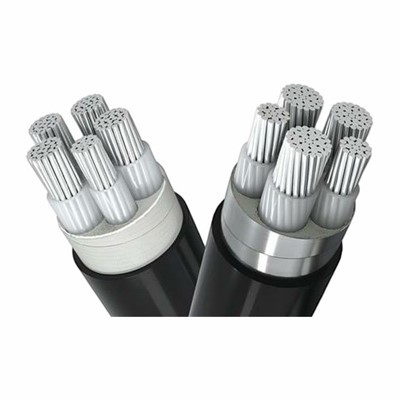
The construction of the cable is also an important factor to consider. There are several different types of cable construction, including single-conductor, multi-conductor, and coaxial.
Single-conductor cables are used for applications where only one conductor is needed, such as power transmission. Multi-conductor cables are used for applications where multiple conductors are needed, such as control systems. And coaxial cables are used for applications where high-frequency signals need to be transmitted, such as in telecommunications.
You’ll also need to consider the insulation and jacket materials of the cable. The insulation material is used to protect the conductors from electrical interference and to prevent the cable from short-circuiting. The jacket material is used to protect the cable from physical damage and to provide a barrier against moisture and chemicals.
Choose the Right Cable Size
The size of the cable is also an important factor to consider. The cable size is determined by the cross-sectional area of the conductors. The larger the cross-sectional area, the lower the resistance of the cable, and the more current the cable can carry.
You’ll need to choose a cable size that is appropriate for the current and voltage requirements of your application. If you choose a cable size that is too small, the cable could overheat and cause damage to your equipment. And if you choose a cable size that is too large, the cable could be more expensive and difficult to install.
Consider the Flexibility of the Cable
The flexibility of the cable is also an important factor to consider. If the cable will be moved or bent frequently, you’ll need a cable with a high degree of flexibility. This will help to prevent the cable from breaking or cracking.
There are several different types of flexible cables, including PVC-insulated cables, rubber-insulated cables, and silicone-insulated cables. PVC-insulated cables are the most common type of flexible cable, and they are suitable for a wide range of applications. Rubber-insulated cables are more flexible than PVC-insulated cables, and they are suitable for applications where the cable will be exposed to extreme temperatures or chemicals. Silicone-insulated cables are the most flexible type of cable, and they are suitable for applications where the cable will be exposed to high temperatures or where a high degree of flexibility is required.
Look at the Certification and Standards
Finally, you’ll need to look at the certification and standards of the cable. The cable should be certified by a recognized testing agency, such as UL or CSA. This will ensure that the cable meets the safety and performance standards of your application.
You’ll also need to look at the standards of the cable. The cable should meet the standards of your industry, such as the National Electrical Code (NEC) or the International Electrotechnical Commission (IEC). This will ensure that the cable is suitable for your application and that it will operate safely and efficiently.
Conclusion
Choosing the right rubber sheathed cable for a specific application is not always easy, but it’s important to take the time to do it right. By understanding your application, considering the voltage and current requirements, looking at the cable construction, choosing the right cable size, considering the flexibility of the cable, and looking at the certification and standards, you can choose the right cable for your application and ensure that it will operate safely and efficiently.
Overhead Electrical Wire If you have any questions or need help choosing the right rubber sheathed cable for your application, please don’t hesitate to contact me. I’m here to help you make the right choice and get the most out of your cable.
References
- National Electrical Code (NEC)
- International Electrotechnical Commission (IEC)
- Underwriters Laboratories (UL)
- Canadian Standards Association (CSA)
Hebei Hualun Cable Co., Ltd.
As one of the leading rubber sheathed cable manufacturers and suppliers in China, we offer a wide range of products with superior quality. We warmly welcome you to buy cheap rubber sheathed cable for sale here from our factory. For price consultation, contact us.
Address: XINGBIEYING INDUSTRIAL ZONE, HEBEI PROVINCE CHINA
E-mail: steven@hualunchcable.com
WebSite: https://www.hualuncables.com/
