As a supplier of the cutting – edge 4.45V Drone Solid – state Lipo Battery with an energy density of 280Wh/kg, I am often asked about how to improve the performance of these remarkable power sources. In this article, I’ll share some insights and strategies that can help enhance the battery’s performance, which is crucial for drone applications where reliability and efficiency are of utmost importance. 4.45V Drone Solid-state Lipo Battery 280Wh/kg

Understanding the Basics of 4.45V Drone Solid – state Lipo Battery
Before delving into performance improvement, it’s essential to understand what makes our 4.45V solid – state LiPo batteries unique. Solid – state lithium – polymer (LiPo) batteries are a leap forward in battery technology compared to traditional liquid – electrolyte lithium – ion batteries. The use of a solid electrolyte in our batteries offers several advantages, such as higher energy density, better safety, and longer cycle life.
The 4.45V voltage is carefully calibrated to provide an optimal power output for drones. With an energy density of 280Wh/kg, these batteries can store a significant amount of energy in a relatively light and compact form. This high energy – to – weight ratio is a game – changer for drone manufacturers, as it allows for longer flight times and more payload capacity.
Temperature Management
One of the most significant factors affecting battery performance is temperature. Both high and low temperatures can have a detrimental impact on the 4.45V Drone Solid – state Lipo Battery.
High Temperatures
When the battery operates in high – temperature environments, the internal resistance increases, which leads to a decrease in efficiency and capacity. Moreover, high temperatures can accelerate the degradation of the battery’s components, reducing its overall lifespan. To mitigate these issues, we recommend implementing effective cooling systems. For example, drones can be equipped with heat sinks or fans that dissipate heat from the battery during operation. Additionally, choosing flight times and locations with cooler temperatures can also help maintain the battery’s performance.
Low Temperatures
In cold weather, the chemical reactions within the battery slow down, resulting in a decrease in voltage and capacity. This can cause the drone to experience power shortages during flight. To combat this, pre – heating the battery before use can be an effective solution. Some advanced drones are now designed with built – in battery heaters that warm the battery to an optimal temperature range before takeoff.
Charging and Discharging Practices
Proper charging and discharging practices are vital for maintaining the performance of the 4.45V Drone Solid – state Lipo Battery.
Charging
Using a high – quality charger that is specifically designed for solid – state LiPo batteries is crucial. The charger should be able to provide a constant current and voltage during the charging process to ensure a safe and efficient charge. Overcharging can lead to thermal runaway and damage the battery, while under – charging can reduce its capacity over time.
It is also important to follow the recommended charging rate. Our batteries are designed to be charged at a specific rate, and exceeding this rate can cause irreversible damage. For example, a slow and steady charge at a lower current can help preserve the battery’s internal structure and extend its cycle life.
Discharging
During discharging, it is essential to avoid over – discharging the battery. Most modern drones are equipped with battery management systems (BMS) that prevent over – discharging by cutting off the power supply when the battery voltage reaches a certain level. However, as a user, you should also be aware of the battery’s state of charge and land the drone before the battery is completely depleted.
Continuous Monitoring and Maintenance
Regular monitoring of the battery’s performance is necessary to identify any potential issues early on. By using a battery analyzer, you can measure parameters such as voltage, capacity, and internal resistance. This data can help you detect any signs of degradation or malfunction in the battery.
In addition to monitoring, proper maintenance is also crucial. Keep the battery clean and dry, and store it in a cool and dry place when not in use. Avoid exposing the battery to moisture, dust, or other contaminants, as these can damage the battery’s external casing and internal components.
Optimization of Battery Management Systems (BMS)
The BMS plays a vital role in the performance and safety of the 4.45V Drone Solid – state Lipo Battery. An advanced BMS can monitor and control the charging and discharging process, balance the cells within the battery pack, and protect the battery from over – charging, over – discharging, and short – circuits.
To improve the performance of the battery, we can continuously optimize the BMS algorithms. For example, by using more accurate sensors and advanced control strategies, the BMS can better adapt to different operating conditions and ensure the battery operates at its optimal level.
Material and Design Improvements
As a supplier, we are constantly researching and developing new materials and designs to improve the performance of our 4.45V Drone Solid – state Lipo Battery. For example, by using advanced cathode and anode materials, we can increase the energy density and cycle life of the battery.
In terms of design, we can optimize the internal structure of the battery to reduce internal resistance and improve heat dissipation. This can lead to better overall performance and efficiency.
Conclusion
Improving the performance of the 4.45V Drone Solid – state Lipo Battery with an energy density of 280Wh/kg requires a comprehensive approach that includes temperature management, proper charging and discharging practices, continuous monitoring and maintenance, optimization of the BMS, and material and design improvements.
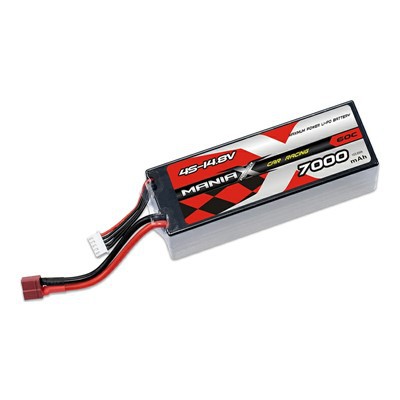
As a dedicated supplier, we are committed to providing high – quality batteries and technical support to our customers. Whether you are a drone manufacturer or an enthusiast, you can rely on our expertise to help you get the most out of our batteries.
RC Heli & Airplane Battery If you are interested in learning more about our 4.45V Drone Solid – state Lipo Battery or wish to discuss a potential procurement, I encourage you to reach out. We are always ready to engage in valuable discussions to meet your specific needs.
References
- Arumugam Manthiram, "A Roadmap for Rechargeable Batteries beyond Lithium – Ion." Nature Reviews Materials, 2020.
- John B. Goodenough, "Challenges for Rechargeable Li Batteries." Journal of the American Chemical Society, 2009.
- Kang Xu, "Nonaqueous Liquid Electrolytes for Lithium – Based Rechargeable Batteries." Chemical Reviews, 2004.
ManiaX Power Technology Co., Ltd.
ManiaX Power Technology Co., Ltd. is one of the most reliable 4.45v drone solid-state lipo battery 280wh/kg manufacturers and suppliers in China, also supports customized service. Please feel free to wholesale bulk durable 4.45v drone solid-state lipo battery 280wh/kg made in China here from our factory.
Address: Room 1508, 15/F, Two Grand tower, 625 Nathan Road, Kowloon, HongKong. P.R. China
E-mail: info@maniax-power.com
WebSite: https://www.maniaxpower.com/
