Solubility of Oleic Acid Derivatives in Different Solvents Oleic Acid Derivatives
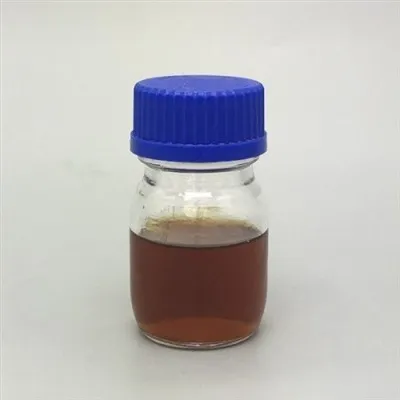
As a supplier of oleic acid derivatives, I’ve had the privilege of exploring the diverse properties of these compounds, and one particularly fascinating area is their solubility in different solvents. This characteristic is not only crucial for various industrial applications but also influences how these derivatives are used in research and development.
Oleic acid derivatives are a class of compounds derived from oleic acid, a monounsaturated omega – 9 fatty acid commonly found in various natural sources such as olive oil, canola oil, and animal fats. These derivatives are obtained through chemical modifications of oleic acid, resulting in compounds with different structures and properties. Their solubility is determined by several factors, including the nature of the solvent, the chemical structure of the derivative, and the temperature.
Let’s start by looking at the solubility of oleic acid derivatives in non – polar solvents. Non – polar solvents, such as hexane and toluene, have a low dielectric constant and do not have a significant separation of charge within their molecules. Oleic acid derivatives, especially the ones with long non – polar hydrocarbon chains, tend to be highly soluble in these solvents. This is due to the principle of "like dissolves like." The non – polar hydrocarbon chains in the oleic acid derivatives interact favorably with the non – polar molecules of the solvent through van der Waals forces.
For example, oleyl alcohol, a derivative of oleic acid, is readily soluble in hexane. Hexane is a common solvent used in the extraction and purification processes of oleic acid derivatives. In industrial settings, hexane extraction is often employed to isolate oleic acid derivatives from natural sources. The high solubility of these derivatives in hexane allows for efficient extraction, as the target compounds dissolve in the solvent while other unwanted components remain insoluble.
Another non – polar solvent, toluene, also shows good solubility for many oleic acid derivatives. Toluene has a slightly higher boiling point than hexane, which can be advantageous in certain processes that require higher temperatures. For instance, in the synthesis of some oleic acid esters, toluene can be used as a reaction medium because it can dissolve both the reactants and the resulting oleic acid derivatives, facilitating the reaction to proceed smoothly.
Moving on to polar aprotic solvents, such as acetone and ethyl acetate. These solvents have a dipole moment but do not have an acidic hydrogen atom. Oleic acid derivatives exhibit moderate solubility in polar aprotic solvents. The polar nature of these solvents allows them to interact with the polar functional groups present in some oleic acid derivatives, such as esters or amides.
Acetone is a widely used solvent in the chemical industry. It has a relatively low boiling point and is highly volatile. In the analysis of oleic acid derivatives, acetone can be used as a solvent for thin – layer chromatography (TLC). The solubility of oleic acid derivatives in acetone enables them to be separated on a TLC plate based on their different affinities for the stationary and mobile phases.
Ethyl acetate is another polar aprotic solvent used in the handling of oleic acid derivatives. It has a pleasant odor and is less toxic than some other solvents. Ethyl acetate is often used in the formulation of coatings and adhesives where oleic acid derivatives are employed as additives. The moderate solubility of these derivatives in ethyl acetate ensures that they can be evenly dispersed in the formulation, enhancing the performance of the final product.
Now, let’s consider polar protic solvents, like water and ethanol. The solubility of oleic acid derivatives in these solvents is highly variable and depends largely on the structure of the derivative. In general, the long non – polar hydrocarbon chains of oleic acid derivatives make them poorly soluble in water. However, if the derivative has a highly polar functional group, such as a carboxylic acid or a sugar moiety, its solubility in water can be improved.
For example, oleic acid itself has limited solubility in water due to its long hydrocarbon chain. But when it is converted into a sodium oleate (a soap), which has a polar carboxylate group, its solubility in water increases significantly. Sodium oleate can form micelles in water, where the non – polar hydrocarbon chains are clustered in the interior of the micelle, while the polar carboxylate groups are exposed to the water molecules.
Ethanol is a polar protic solvent that has some ability to dissolve oleic acid derivatives. It is a common solvent in the pharmaceutical and cosmetic industries. Some oleic acid esters and amides can be dissolved in ethanol to a certain extent. Ethanol can also be used as a co – solvent in combination with water to improve the solubility of oleic acid derivatives. In pharmaceutical formulations, ethanol – water mixtures are often used to dissolve active ingredients that are oleic acid derivatives, ensuring their proper delivery and efficacy.
Temperature also plays a significant role in the solubility of oleic acid derivatives. In general, the solubility of most substances increases with increasing temperature. For oleic acid derivatives, this is also true in many cases. As the temperature rises, the kinetic energy of the molecules increases, which allows for more effective interaction between the solute (oleic acid derivative) and the solvent molecules. This leads to an increase in solubility.
In industrial processes, temperature control is carefully managed to optimize the solubility of oleic acid derivatives. For example, in the production of lubricants containing oleic acid derivatives, the mixture is often heated to a certain temperature to ensure that all the components are fully dissolved and uniformly mixed. This results in a high – quality lubricant with consistent performance.
The solubility of oleic acid derivatives in different solvents is a complex but important property that has far – reaching implications in various industries. Whether it’s in the extraction, synthesis, formulation, or analysis of these compounds, understanding their solubility behavior is essential for achieving optimal results.
As a supplier of oleic acid derivatives, I am well – aware of the importance of these solubility characteristics for our customers. We offer a wide range of high – quality oleic acid derivatives, and we can provide detailed information on their solubility in different solvents to assist our customers in their research, development, and production processes.
If you are interested in our oleic acid derivatives, or if you have any questions regarding their solubility or other properties, please feel free to contact us for further discussion and potential procurement. We are committed to providing the best products and services to meet your specific needs.
Dithiophosphate References
- "Organic Chemistry" by Paula Yurkanis Bruice. It provides in – depth knowledge about the solubility principles of organic compounds, including fatty acid derivatives.
- "Industrial Solvents Handbook" by William H. Schultz. This handbook offers comprehensive information on the properties and applications of various solvents, which is useful for understanding the solubility of oleic acid derivatives in different solvents.
- Research papers on the synthesis and characterization of oleic acid derivatives from academic journals such as "Journal of Organic Chemistry" and "Journal of Chemical Technology and Biotechnology", which often contain experimental data on the solubility of these compounds.
Bitop Bihope Qingdao Mining Co., Ltd
Bitop Bihope Qingdao Mining Co., Ltd. is one of the most professional oleic acid derivatives manufacturers and suppliers in China, featured by quality products and low price. Please rest assured to buy discount oleic acid derivatives in stock here and get quotation from our factory. Customized orders are welcome.
Address: Room 410, 4th Floor, Shengquan Business Building, No. 263 Yitong Road, Huangdao District, Qingdao City, Shandong Province, China
E-mail: btbhmining@163.com
WebSite: https://www.btbhmining.com/
