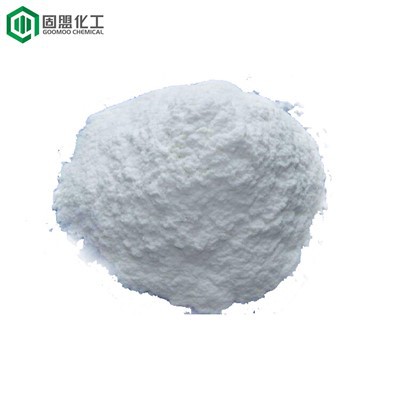
Hey there! I’m a supplier of Low-Substituted Hydroxypropyl Cellulose (L-HPC), and today I wanna share with you how this awesome stuff is synthesized. Low-Substituted Hydroxypropyl Cellulose(L-HPC)
The Basics of L-HPC
Before we jump into the synthesis process, let’s quickly understand what L-HPC is. L-HPC is a modified cellulose derivative. Cellulose is like the building block of plants, you know? It’s in the cell walls of plants. L-HPC is special because it has a low degree of hydroxypropyl substitution. This gives it some cool properties, like being a great binder and disintegrant in the pharmaceutical industry, and it’s also used in food and cosmetics.
Starting Materials
The first thing we need to start making L-HPC is cellulose. We usually get this from natural sources like wood pulp or cotton linter. Wood pulp is super common because it’s readily available and relatively inexpensive. Cotton linter is a bit more pure, so sometimes we use that for high-quality products.
We also need propylene oxide. This is a key chemical that will introduce the hydroxypropyl groups into the cellulose structure. It’s a reactive compound, so we have to handle it with care. And of course, we need some solvents and catalysts to help the reaction go smoothly.
The Alkali Treatment
The first step in the synthesis is to treat the cellulose with an alkali solution, usually sodium hydroxide (NaOH). This is called the alkalization process. When we mix cellulose with the alkali, it swells up. You can think of it like a sponge soaking up water. The alkali breaks down the hydrogen bonds in the cellulose structure, making it more reactive.
We usually do this in a big reactor. The temperature and time are crucial here. We keep the temperature around 20 – 30 degrees Celsius and let the reaction go for about an hour. This gives the alkali enough time to penetrate the cellulose fibers and do its job.
After the alkalization, we have what’s called alkali cellulose. This stuff is ready to react with the propylene oxide to form L-HPC.
The Etherification Reaction
Now comes the main event: the etherification reaction. We add the propylene oxide to the alkali cellulose in the reactor. The propylene oxide reacts with the hydroxyl groups (-OH) on the cellulose chains. This creates an ether linkage between the cellulose and the hydroxypropyl groups.
The reaction is exothermic, which means it releases heat. So we have to control the temperature carefully. We usually keep it between 30 – 40 degrees Celsius. If the temperature gets too high, the reaction can go out of control, and we might end up with a product that doesn’t have the right properties.
The reaction takes a few hours to complete. We stir the mixture constantly to make sure all the reactants are well mixed. As the reaction progresses, the cellulose gradually turns into L-HPC.
Purification
Once the reaction is done, we have a crude product that contains L-HPC, as well as some unreacted starting materials and by-products. So we need to purify it.
The first step in purification is to wash the product with water. This removes most of the water-soluble impurities, like the alkali and any unreacted propylene oxide. We do this several times to make sure the product is as clean as possible.
After the water wash, we might use some organic solvents to further purify the L-HPC. For example, we can use ethanol or isopropanol. These solvents can dissolve some of the non-polar impurities that the water couldn’t remove.
Finally, we dry the purified L-HPC. We usually do this in a dryer at a low temperature, around 50 – 60 degrees Celsius. This removes any remaining water and solvents, leaving us with pure, dry L-HPC.
Quality Control
Before we sell our L-HPC, we have to make sure it meets the quality standards. We do a bunch of tests to check its properties.
One of the most important tests is the degree of substitution (DS). This tells us how many of the hydroxyl groups on the cellulose have been replaced with hydroxypropyl groups. We want the DS to be in a specific range for L-HPC. Usually, it’s between 0.05 and 0.2.
We also test the particle size of the L-HPC. The particle size affects its performance in different applications. For example, in the pharmaceutical industry, a smaller particle size might be better for some formulations.
Another test is the moisture content. We want the moisture content to be low, usually less than 5%. If the moisture content is too high, the L-HPC might clump together and not work properly.
Applications of L-HPC
Now that we know how L-HPC is synthesized, let’s talk a bit about its applications.
In the pharmaceutical industry, L-HPC is a superstar. It’s used as a binder in tablets. A binder is something that holds all the ingredients in a tablet together. Without a good binder, the tablet would fall apart. L-HPC is also a great disintegrant. When you take a tablet, the disintegrant helps it break down in your stomach so that the active ingredients can be absorbed.
In the food industry, L-HPC can be used as a thickener and stabilizer. It can improve the texture of food products, like sauces and dressings.
In cosmetics, L-HPC is used in things like creams and lotions. It can help keep the product stable and prevent the ingredients from separating.
Why Choose Our L-HPC
As a supplier of L-HPC, I’m really proud of the product we offer. We use high-quality starting materials and follow strict manufacturing processes. Our quality control measures are top-notch, so you can be sure that you’re getting a product that meets the highest standards.

Whether you’re in the pharmaceutical, food, or cosmetics industry, our L-HPC can be a great addition to your products. It’s cost-effective, and it performs really well.
Bismuth Products If you’re interested in our L-HPC, or if you have any questions about the synthesis process or its applications, don’t hesitate to reach out. We’re always happy to have a chat and see how we can help you with your needs.
References
- “Cellulose derivatives: synthesis, properties, and applications”, Journal of Polymer Science
- “Pharmaceutical excipients: a guide to properties, use, and safety”, by Rowe et al.
- “Food additives and their uses in the food industry”, various research papers in food science journals
Changsha Goomoo Chemical Technology Co., Ltd.
With abundant experience, we are one of the most reliable low-substituted hydroxypropyl cellulose(l-hpc) manufacturers and suppliers in China. We warmly welcome you to buy customized low-substituted hydroxypropyl cellulose(l-hpc) made in China here from our factory. If you have any enquiry about free sample, please feel free to email us.
Address: No.61,Jinma Road,Kaifu District Changsha 41005,Hunan,P.R.China
E-mail: allen@goomoochina.com
WebSite: https://www.gumchem.com/
