Hey everyone, Film Blowing Machine
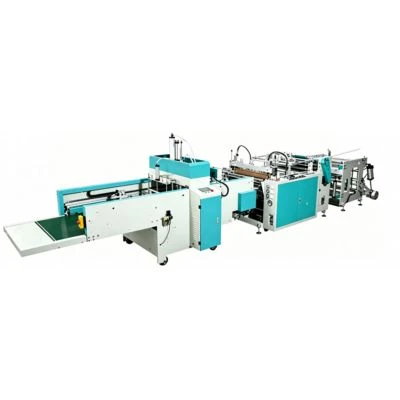
If you’ve ever walked into a plastic packaging plant or scrolled through how food wraps, grocery bags, or even those stretchy films for pallets are made, you’ve probably heard the terms “vertical film blowing machine” and “horizontal film blowing machine” thrown around. As someone who’s been supplying these machines for years, I get it – it can feel super confusing at first, like comparing two gadgets that look similar but do totally different jobs. Today I’m gonna break down the real differences between these two, no boring jargon, just what actually matters for anyone looking to buy or use one.
First off, let’s start with the basics of how a film blowing machine works, quick recap, okay? The core process is the same for both: you melt plastic resin (usually PE, PP, PVC, or even recycled plastic pellets), push that molten plastic through a circular die, blow air into the center of that hot plastic tube to inflate it like a giant bubble, cool it down, flatten it, and then wind it up into a roll. That’s the magic behind all those thin, flexible plastic films we use every day. The only big difference? The direction that inflated bubble moves up or down, and that tiny detail changes everything for what kind of film you make and how your whole plant runs.
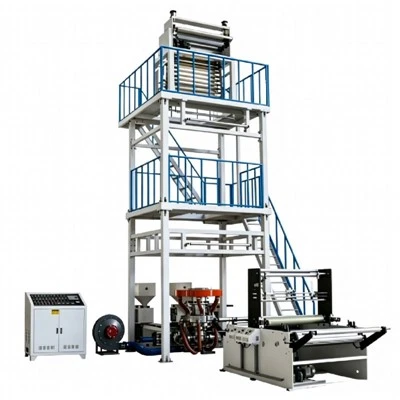
Let’s talk vertical first, because that’s the one most people ask about when they’re starting out. Vertical film blowing machines – yeah, “vertical” here means the bubble goes straight up, right from the die at the bottom all the way up to the collapsing guides at the top. I see why this is the go-to for a lot of small to mid-sized businesses. For one, the setup is way more space-efficient in terms of floor space. Let’s be real, most plant floors are cluttered with other machines – printers, slitter rewinders, raw material storage – so if you can save floor space by going up instead of out, that’s a huge win. I’ve had customers with 10x15m production spaces swear by vertical machines because they don’t have to clear out a 20m long stretch of floor just for the bubble.
Then there’s the cooling part. Vertical machines use what’s called an air ring, which blows cool air directly around the outside of the inflated bubble. Because the bubble is moving straight up, the air flow is super consistent all around the tube, right? That means the film thickness is more even, less likely to have thin spots or bulges. For films that need to be super uniform – like food packaging, where you can’t have a weak spot that’ll tear when sealing or transporting – that’s a big plus. Also, vertical machines handle thicker films better, believe it or not. Things like heavy-duty garbage bags, construction films, or agricultural mulch films – those need to be sturdy, and the steady upward pull of the bubble, plus consistent cooling, helps keep the thickness even on those thicker, heavier materials.
Wait, but what are the downsides of vertical? Oh, right, they’re not great for super wide films. The tallest vertical machines I’ve worked with top out at around 12m, and even then, if you go wider than, say, 2 meters, the bubble gets a little wobbly as it goes up, which can mess with thickness. Also, if you’re running super thin films – like cling wrap, which is often less than 10 microns thick – vertical can have a bit of a problem with static or the bubble bouncing if the air flow isn’t dialed in perfectly. I tell new customers: if your main product is mid-width, medium-thickness films, vertical is usually the safe bet.
Now let’s flip to horizontal – the underdog that a lot of people sleep on until they need it. Horizontal film blowing machines do the same basic process, but the inflated bubble moves side to side, along a horizontal axis, instead of up. That means the whole machine has to be longer, sometimes 20 or 30 meters, because the bubble has room to stretch out horizontally. So first thing: space. If you have a big, open plant floor, horizontal is fine, but if you’re crammed, this is not your guy.
But here’s where horizontal shines: wide films. I’m talking 3 meters and up, even 6 meters for some specialty applications. Think of things like tarps, greenhouse covers, or large stretch films for full pallets – those need to be wide enough to cover big areas, and horizontal machines can handle that no problem. Why? Because the bubble is moving horizontally, there’s less gravitational pull on the hot plastic tube compared to vertical (where the bubble is pulling itself up against gravity as it cools), so the tube stays more uniform even when it’s super wide. No wobbly bubbles that throw off thickness when you need a 4-meter wide film.
Another big plus for horizontal: processing thinner films. Cling wrap, snack packaging, even some industrial shrink films that need to be ultra thin but still strong. Because the horizontal setup has more control over the bubble’s tension as it moves, and the cooling can be adjusted along the length of the machine, you get way more consistent thin films without that sag or unevenness that vertical machines sometimes get with super lightweight materials. Also, horizontal machines are easier to integrate with other downstream equipment, like high-speed slitters or printing lines, because the roll of film comes off horizontally, which lines up better with machinery that’s set up side-by-side instead of stacked vertically.
Wait, but horizontal has its own pain points, right? That length is a big one. You need a ton of floor space, and moving it or installing it can be a hassle – I always warn customers with temporary setups or small spaces to skip horizontal. Also, because the bubble is moving side to side, there’s more chance of air drafts messing with the cooling if your plant isn’t super climate-controlled. Even a little breeze from a door or a fan can throw off the bubble’s shape, leading to uneven film. And if you make a lot of different film widths, switching between them on a horizontal machine takes longer, because you have to adjust guides and tension along the whole length of the machine, whereas vertical adjustments are a bit more centralized.
Now, let’s talk about what actually matters when you’re choosing between these two, because it’s not just about direction, it’s about your product and your space. I’ve had customers come to me saying “I need a film blowing machine, give me vertical” and then later realize they need to make 5-meter wide greenhouse covers, so they end up switching to horizontal. Or vice versa: a customer who bought a huge horizontal machine in a small plant can barely get the bubble to stretch out without hitting walls.
Let’s break it down into quick decision points, okay? First, what’s the width of the film you need? If you’re under 2 meters wide, vertical is perfect. If you’re 3 meters or more, horizontal is non-negotiable. Second, what’s the thickness? If you’re making thick, heavy films (garbage bags, mulch, tarps), vertical works for mid-thickness, but super wide thick films might still need horizontal. If you’re making ultra-thin films (cling wrap, snack packaging), horizontal gives better consistency. Third, how much floor space do you have? This is the biggest practical factor. If you can spare a long, open stretch of floor, horizontal. If space is tight, even if you need a slightly wider film, some advanced vertical machines now go up to 2.5 meters wide, so that’s a middle ground I recommend a lot of people check out.
Also, don’t sleep on maintenance and operation. Vertical machines are simpler for new operators to learn, because the controls are all at the top near the collapsing guides, so you can watch the bubble as it moves up, adjust air flow on the fly. Horizontal machines have controls along the whole length, so operators need a bit more training to keep an eye on the bubble as it moves side to side. And spare parts: if you go with a reputable supplier (shoutout to all the folks reading this who trust us for that), parts for both are pretty standard, but vertical has fewer moving parts along the bubble path, so less to break.
Wait, let’s add a real example to make this concrete. Last year, I had a customer who ran a small plant making bread bags. Their old machine was a tiny vertical, but they wanted to scale up to snack bags that were wider, thinner, and higher volume. They thought they needed a horizontal machine, but their floor space was only 10 meters long – way too small. So we adjusted their vertical machine to an upgraded model that did 2.2 meter wide films, added a better air ring and cooling system, and now they run their snack bags on it, no issues, saved 10k euros on a machine they didn’t need. Another customer, a large agricultural supplier, needed 5-meter wide greenhouse films, so we hooked them up with a horizontal machine – their only regret? They didn’t buy it sooner, because the width and thickness consistency is way better than their old vertical could do.
A common myth I hear all the time is that vertical is old tech and horizontal is better. Nope, that’s not true at all – they’re built for different jobs. It’s like comparing a compact car to a pickup truck: both drive, but one’s for city errands, the other’s for hauling big loads. You don’t use a compact to tow a trailer, and you don’t use a pickup to squeeze into a tiny parking spot. Same with these two machines.
Another point: raw material flexibility. Most modern machines, vertical or horizontal, work with PE, PP, recycled materials, even some specialty films. But I’ve noticed that vertical machines handle recycled materials a bit better, because the consistent cooling helps smooth out any inconsistencies in the recycled pellets, whereas horizontal can sometimes have issues with recycled plastic if the air flow is off, since the bubble is longer. That’s a big one for companies focused on sustainability, since recycled plastic is way more common now.
Now, let’s talk about what’s new in the last few years, because these machines have come a long way. A lot of suppliers, including us, have started making hybrid models that blend vertical and horizontal features for medium-width films – like machines where the bubble goes up a few meters, then turns horizontal for the rest of the process. They’re perfect for customers who need a bit of width but don’t have 20 meters of floor space, so they’re becoming super popular. But even with hybrids, when you’re going above 3 meters wide, a pure horizontal machine is still more consistent and cost-effective.
So, wrapping this up, if you’re trying to figure out which one you need, start with three questions: 1) How wide does my final film need to be? 2) What’s the typical thickness I’m producing? 3) How much floor space do I have to work with? Don’t just go with what’s “trendy” – go with what fits your products and your plant.
If you’re still unsure, maybe you’re expanding your line, or switching to new film types, or just upgrading your old machine – reach out. We’ve helped hundreds of customers narrow down the right machine, walk through setup, maintenance, even how to adjust for different films. We don’t push the most expensive machine, we push the one that fits your needs. That’s what matters, right? Not just selling a machine, but making sure it works for you.
Before I go, let’s list out the key takeaways so you don’t forget:
- Vertical: bubble moves up, saves floor space, great for <2m wide mid-thickness films, easier for new operators.
- Horizontal: bubble moves side to side, needs lots of space, ideal for >3m wide wide/thin films, better for high-volume specialty products.
- Don’t buy based on hype – match to your specific product, space, and production goals.
If you’re ready to chat through your needs, or just have more questions, get in touch. I’m happy to walk through specs, show you real customer examples, even tell you what to look for in a supplier (hint: don’t go for the cheapest, go for someone who’ll support you after the sale).
Thanks for sticking around, and next time we’ll talk about how to tune your air ring for perfect film thickness – that’s a whole other can of worms, but a super important one.
Bag Making Machine References:
- Plastic Film Extrusion Technology: Principles and Practice, 2021, Smith et al.
- Industrial Film Blowing Machinery: Selection and Application Guide, 2022, Global Plastics Association
- Vertical vs Horizontal Film Blowing Machine Performance Analysis, 2023, Journal of Polymer Processing and Engineering
- Sustainable Film Production: Machine Design for Recycled Resins, 2022, International Society of Plastics Engineers
Ruian Jianhao Precision Machinery Co., Ltd.
As one of the most professional film blowing machine manufacturers and suppliers in China, we’re featured by quality products and good price. Please rest assured to wholesale durable film blowing machine for sale here from our factory. Welcome to contact us for customized service and quotation.
Address: No. 8, Jianshe Road, Beiyu Village, Shangwang Street, Ruian City, Wenzhou City, Zhejiang Province
E-mail: 1832333027@qq.com
WebSite: https://www.jianhaomachinery.com/
