Hey everyone, let’s cut to the chase—if you’re in the water utility game or a building manager, you’ve probably wondered how those IoT remote water meters we supply actually “talk” to other smart devices. I get it, when you’re busy juggling leak alerts, billing cycles, and maintenance schedules, tech jargon can feel like a foreign language. But stick with me here, because this isn’t just geeky stuff—it’s the backbone of why our meters save you money, cut water waste, and take the guesswork out of your operations. IoT Remote Water Meter
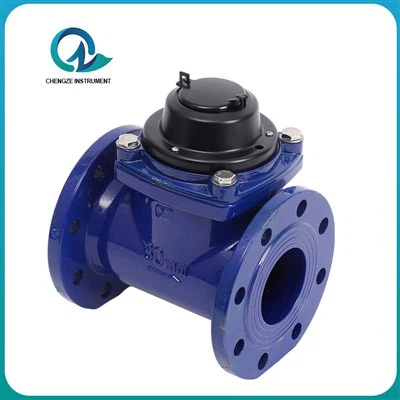
First off, let’s set the scene. A remote water meter isn’t just a fancy version of the analog dial you’ve had in your basement for 50 years. It’s a tiny computer with a flow sensor, a power source (usually a long-lasting battery, since you don’t want to run wires to every meter in a 100-unit apartment complex), and a radio chip that lets it send and receive data. But it can’t do that in a vacuum—its whole superpower is talking to things like your building’s smart thermostat, a municipal water management dashboard, or even your office’s energy management system. So how does that communication work?
Let’s start with the “how” of the meter itself. The core job of our remote water meter is to capture real-time data: gallons used, pressure spikes that might mean a hidden leak, even temperature changes that could signal a broken pipe. Once that data is collected, it needs to get from the meter’s sensor to somewhere useful—like your phone or your utility’s server. That’s where communication protocols come in, and this is where a lot of people get confused, so let’s keep it simple. Protocols are just the “rules” devices use to chat—like how you’d use English with a friend and Spanish with a neighbor, except way more standardized so nothing gets lost in translation.
For our meters, we pick protocols that work best for their environment. Most of our residential and small commercial meters use LoRaWAN, which stands for Long Range Wide Area Network. Wait, no need to memorize the acronym—just know this: LoRaWAN is made for sending small chunks of data over long distances without using a ton of power. That’s perfect for a water meter that might be buried in a utility closet or on the side of a building, where cell service is spotty. A single LoRa gateway (think of it as a big Wi-Fi router for smart devices) can cover a whole neighborhood—up to a few miles, depending on terrain—so one gateway can connect hundreds of our meters. No need to run expensive fiber or cellular wires everywhere, which keeps costs low for you.
But what if you’re in a dense urban area with tight cell coverage? For larger commercial buildings or municipal systems, we also offer meters that use cellular LTE-M or NB-IoT. Those are low-power cellular standards designed just for IoT, not for your smartphone. They’re faster than LoRaWAN and great if you need real-time alerts, like a pressure drop that means a main break 24/7. For example, if a meter picks up an unusual flow at 2 a.m., it can send a text alert straight to your maintenance team instantly, instead of waiting for a daily LoRaWAN check-in.
Now, how does the meter talk to other IoT devices, not just servers? Let’s say you have a smart irrigation controller that you want to sync with your water meter. If your meter detects that your lawn is already using twice as much water as normal, it can send a signal to the irrigation controller to cut back on watering that day. That’s where MQTT comes in—another protocol that’s like a messenger who only delivers urgent messages instead of spamming your inbox. MQTT is lightweight, so it doesn’t take up a lot of bandwidth, which means even a small water meter battery can last 10+ years (yep, we build our meters with that kind of longevity). It works over LoRaWAN, cellular, or even Wi-Fi, so our meters can plug into your existing IoT ecosystem—no need to rip out all your other smart devices.
Wait, but what about security? I know what you’re thinking—“If these meters are connected, could someone hack them?” That’s a super fair question, and it’s one we take extremely seriously. Every single one of our meters uses end-to-end encryption, which means the data sent from the meter is scrambled so only your device or your approved dashboard can decode it. We also use mutual authentication, so the meter doesn’t talk to just any random device—it only connects to ones we (and you) set up as trusted. No more worrying about someone tapping into a water meter to mess with your bills or your building’s systems. That’s non-negotiable for us.
Let me throw in a real example to make this concrete. Last year, we installed 200 of our IoT remote water meters in a mid-rise apartment complex in Chicago. The property manager was dealing with constant hidden leaks that cost them thousands a month in wasted water and tenant complaints. Our meters were set up to communicate with the building’s existing smart HVAC system and a cloud-based dashboard we provide. Here’s how it worked: every hour, the meter would send flow data to the dashboard. If the dashboard noticed a flow spike in a vacant unit (meaning a leak from a broken pipe), it would not only alert the maintenance team via text but also send a signal to the unit’s HVAC thermostat to hold off on extra energy use (since the maintenance team wouldn’t need to run extra checks to turn off the water while they fixed the leak). Within three months, that complex cut their water waste by 32% and saved over $12,000 in the first six months alone. That’s the power of that communication working seamlessly—no siloed devices, no missed alerts, just connected systems that work for you.
Another thing people don’t always realize: our meters can also send data the other way. It’s not just the meter talking to devices—devices can send commands to the meter. For example, if your utility needs to do a mass shut-off for a water main repair, they can send a secure command from their dashboard to all the meters in a neighborhood to stop sending data temporarily, or even shut off the water remotely (for accounts that have given permission, of course). That’s way faster than sending a crew door-to-door, especially in bad weather. We’ve had municipalities use this during snowstorms to shut off water for repairs without risking workers’ safety, and it’s cut their repair time by half.
Now, let’s talk about common myths I hear from potential clients. A lot of people think IoT meters are too complicated to integrate with their current devices. Here’s the truth: we don’t sell a one-size-fits-all system. Our tech team can work with your existing IoT tools—whether that’s a Siemens building management system, a AWS cloud dashboard, or even a small business’s custom water monitoring app—to make sure our meters communicate with them. We don’t lock you into a proprietary ecosystem, either. If you want to switch your dashboard down the line, our meters work with most standard IoT platforms. That’s a big deal, because we’ve seen too many companies buy smart devices that only talk to their own software, leaving clients stuck with expensive replacements.
Wait, what about rural areas where there’s no cellular or LoRaWAN gateway? We’ve got you covered there too. Some of our meters use satellite communication for remote locations, like farms or cabins out in the country. Sure, satellite is a bit pricier than LoRaWAN, but it works everywhere—no dead zones, no gateways needed. A farmer in Iowa, for example, can have a meter on their irrigation well that sends data via satellite to their phone, so they don’t have to drive 10 miles just to check how much water their pump is using. That’s the kind of flexibility we build into every meter.
Let’s circle back to why this matters for you, not just the tech geeks. When your meter communicates with other IoT devices, it eliminates so many headaches. No more manual readings (which are error-prone—we’ve seen utilities overbill customers by $500 a month because of a bad analog reading). No more waiting for a monthly bill to spot a leak. No more paying for water that’s wasted because you didn’t know about a pipe break. And because the communication is low-power, our meters run on a single battery for 10 to 15 years, so you barely have to touch them after installation.
If you’re a building manager, a water utility director, or a facilities coordinator reading this, you’re probably thinking, “Okay, this sounds great—how do I get started?” The short answer is, just reach out. We don’t do hard sells here. Our team will walk you through your specific setup, whether you have a 10-unit residential building or a 1,000-unit municipal system, and show you exactly how our meters will communicate with your existing devices, no fancy hoops to jump through. We’ve worked with all kinds of clients, from small businesses to large cities, and we tailor every solution to their needs.

At the end of the day, IoT is all about connectivity—connecting your water meter to the rest of your systems so you can save money, reduce waste, and work smarter. It’s not some futuristic concept; it’s already making a difference for clients across the country, and it’s only getting better. If you’re ready to stop guessing about your water use and start letting your devices work for you, don’t hesitate to get in touch. We’re here to answer any questions, show you more real-world examples, and help you figure out the best solution for your space.
Ultrasonic Water Meter References
- “LoRaWAN: Low Power Wide Area Networks for IoT,” LoRa Alliance, 2023.
- “LTE-M and NB-IoT: Enabling Massive IoT Connectivity,” GSMA, 2022.
- “MQTT Version 3.1.1,” OASIS Standard, 2014.
- “IoT Device Security: End-to-End Encryption Best Practices,” International Society of Automation, 2023.
- “Remote Water Metering: Use Cases and Benefits,” Water Environment Federation, 2022.
Shandong Chengze Instrument Co., Ltd.
We’re well-known as one of the leading iot remote water meter manufacturers in China, featured by quality products and good service. Please rest assured to buy high-grade iot remote water meter for sale here from our factory. Also, customized service is available.
Address: No.7, Wensi Road North Industrial Park, Liguan Town, Lanshan District, Linyi City, Shandong Province, China
E-mail: czwatermeter@163.com
WebSite: https://www.cz-watermeter.com/
