Hey guys, if you’ve worked with plumbing materials for even a little while, you’ve definitely heard of PPR valves. As a supplier of these bad boys, I get asked this question at least once a week from plumbers, contractors, and even homeowners: “Are PPR valves actually up to industry standards?” It’s a totally fair question—standards aren’t just random rules, they’re what keep pipes from bursting, leaks from ruining walls, and you from dealing with a total nightmare mid-renovation. Let me break this down like I would chat with a buddy over a coffee, no stuffy jargon, just what you actually need to know. PPR Valves
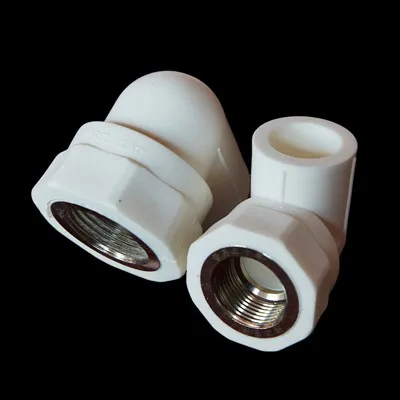
First off, let’s get what PPR valves are out of the way quick, in case you’re new to them. PPR stands for Polypropylene Random Copolymer, right? It’s that super tough, flexible plastic that’s used for hot and cold water lines all over residential and commercial builds. The valves made from it aren’t like those old metal ones that rust after a few years—they’re lightweight, easy to install, and way cheaper than brass or copper alternatives. But with any plastic plumbing product, standards are non-negotiable. You can’t just grab any random PPR valve off a overseas site and call it good; that’s where compliance comes in.
So what even are the main industry standards we’re talking about here? Let’s stick to the ones that actually matter for most folks. For North America, that’s ASTM F2389—this is the spec specifically for PPR fittings and valves. It covers everything from how much pressure they can handle (like, 200 psi at room temp, way more than your average household water pressure which is usually 40-80 psi) to how they hold up to hot water over time. For Europe, it’s DIN 8077/8078, which is split into parts for the pipe and the valves, plus ISO 15874 that harmonizes a lot of that so it works cross-border. And then there’s the NSF/ANSI 61 certification, which is non-negotiable if the valve’s going to be touching drinking water. That’s the one that makes sure no weird chemicals leach out into your tap water—total big deal for residential projects.
Now, let’s get to the part you care about: how do you know if a PPR valve is actually compliant? It’s not just a sticker on the box, guys. Here’s the stuff I check every time before we stock a new batch. First, look for the certification marks. If you’re in the US, NSF mark, ASTM stamp, maybe a CSA mark for Canada. In the EU, the CE mark linked to DIN/ISO standards. If there’s no mark? Run. I don’t care how cheap it is, that’s a red flag. Last year, we had a customer bring in a batch of PPR valves he bought from a random supplier online that were cheap, no markings. We tested them in our in-house pressure tester (we do that for every new shipment, just to be safe) and they cracked at 120 psi—half what they should handle. That’s the kind of thing that causes a flood at 2 a.m. No thanks.
Then there’s the manufacturing process. Compliant PPR valves aren’t just melted plastic dumped into a mold. They go through strict quality control. For example, ASTM F2389 requires that the valve’s body is made from virgin PPR, not recycled plastic. Wait, recycled plastic sounds good for the planet, but if it’s contaminated with other plastics or has weak points, it breaks way easier. We only use 100% virgin PPR for our valves, every single time. We also do weld tests—when you fuse a PPR valve to a pipe, the joint should be stronger than the pipe itself. Non-compliant valves often have thin walls, so the weld fails before the pipe does. That’s another thing we test: we do a hot water cycle test, running 180-degree water through the valve for 1,000 hours, to make sure it doesn’t deform or leak. If a valve passes that, it’s actually going to last.
I’ve seen so many people cut corners on PPR valves, and it always backfires. Last month, a small contractor used a non-compliant PPR valve on a commercial office building’s hot water line. Six months later, the valve burst, flooded three floors, and they had to replace all the sheetrock, furniture, and even the electrical in some rooms. The total bill was way more than if he’d just bought compliant valves in the first place. That’s why compliance isn’t just a checkbox—it’s protecting your project, your money, and your reputation if you’re a contractor.
Now, a common myth I hear a lot: “All PPR valves are the same, so if one is compliant, they all are.” Nope. Total myth. There’s three main grades of PPR, right? PPR-H, PPR-R, and PPR-S. Wait, let me simplify that: PPR-S (sometimes called PPR 20) is for cold water only, PPR-R (PPR 25) is for hot and cold, and PPR-H (PPR 35) is for higher temp applications, like underfloor heating. Compliant valves will be labeled with the correct grade for the job. If you’re using a hot water line and someone tries to sell you a PPR-S valve? That’s non-compliant for that use case. It’ll get soft and leak once you turn up the heat. We make sure every valve we stock is labeled with the temperature and pressure rating, so you don’t mix that up.
Another thing: certification isn’t a one-and-done. Good suppliers (like us, obviously) have third-party audits every year to make sure our products still meet the standards. I’ve heard of some smaller suppliers that used to have compliant valves, then cut corners to save money and skipped the audits, so their products slipped. That’s why it’s important to work with a supplier that’s transparent about their certifications. If you ask and they can’t pull up copies of the test reports? Walk away. We keep all our ASTM, NSF, and DIN test reports on hand for every shipment, so any customer can ask for them anytime. We even let some of our bigger contractors come check our testing lab if they want—transparency goes a long way for us.
Wait, what about newer standards? A lot of people don’t know there’s also ISO 21003, which is for multi-layer PPR pipes, but the valves for those still need to meet the same core PPR valve standards. And for low-pressure applications, like a backyard irrigation line, do you still need compliant valves? Yeah, even then—you don’t want a valve bursting when you’re on vacation and wasting hundreds of gallons of water. Non-compliant valves might have hidden flaws that show up after a few months, even at low pressure.
Let me also be real with you: there’s a difference between “compliant” and “overkill.” Some guys will tell you you need a $50 PPR valve for a small bathroom remodel, but that’s not necessary. Our standard compliant PPR valves are around $10-$15 each, which is way cheaper than brass valves that are $30+ and will rust. You just need to make sure they have the right certifications for your application. If it’s a residential hot water line, NSF 61 and ASTM F2389 is all you need. For commercial, add in ISO 15874 if you’re working internationally.
So putting this all together: yes, PPR valves can be compliant with industry standards, but not all of them are. The key is to check for the right certifications, make sure the valve is matched to your project’s needs, and work with a supplier that stands behind their products. As someone who’s been in this game for 8 years, I’ve seen the bad, the good, and the ugly when it comes to non-compliant valves. The best advice I can give is to never skimp on something that’s going to hold water.

If you’re a plumber, contractor, or even a homeowner planning a remodel, and you want to check if the PPR valves you’re using are up to snuff, or you’re looking for a reliable supplier that only stocks compliant, tested valves—hit us up. We’re here to answer questions, send over test reports, or even help you pick the right valve for your specific job. No pressure, just good service.
Plastic Pipe References
ASTM International. Standard Specification for Polypropylene (PPR) Pipe and Fittings for Pressure Piping; ASTM F2389-21.
Deutsches Institut für Normung (DIN). Polyethylene (PE) and Polypropylene (PP) Pipes and Fittings for Pressure Applications – Part 1: PPR Pipes; DIN 8077:2019, Part 2: Fittings; DIN 8078:2019.
International Organization for Standardization (ISO). Plastics – Polypropylene (PP) Materials and Products for Pressure Piping Systems; ISO 15874:2019.
National Sanitation Foundation (NSF). Drinking Water System Components – Health Effects; NSF/ANSI 61:2022.
Hebei Ruijie Pipe Industry Co., Ltd.
Address: Industrial Park, Shaozhuang Township, Suning County, Cangzhou City, Hebei Province
E-mail: 1987870474@qq.com
WebSite: https://www.rjpprpipe.com/
