Hey there, if you’re in the nail processing game, you know how much a smooth control system makes or breaks your line. No one wants slow cycles, misfeeding nails, or that panic when a sensor stops talking to the motor mid-shift. As a nail processing line supplier, I’ve spent years fielding questions from shop owners and line engineers about which comms protocols actually work for this hyper-specific, messy, high-stakes space. Let’s break down the ones we rely on every day, no jargon overload—just real talk. Nail Processing Line
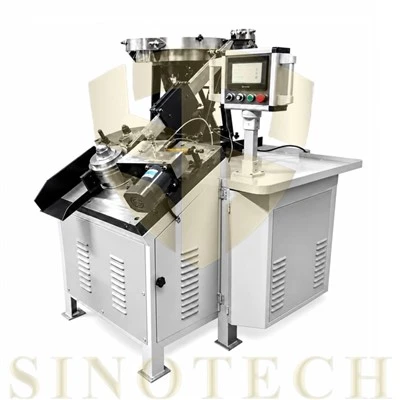
First off, let’s ground this: a nail processing line isn’t a fancy lab robot. You’ve got stamping presses that bang out nail heads, feeders dragging raw wire through rollers, sensors checking for bent shanks, maybe a packaging unit stacking finished nails. Every part needs to talk to the main control panel (usually a PLC, or programmable logic controller—you know, that brain box keeping everything in sync). The wrong comms protocol? You get lag, missed signals, and that 2 AM service call because a feeder stopped talking and dumped 100 pounds of bent wire on the floor. I’ve been there, so trust me when I say these aren’t one-size-fits-all.
First up, the OG workhorse here: Modbus RTU. If you’re not familiar, Modbus is like the old flip phone of comms—super simple, works, and everyone knows how to use it. For a nail line, it’s perfect for the basic stuff: temperature sensors on the stamping die, proximity sensors checking if wire is feeding, maybe even the little motors that adjust nail length. We run Modbus RTU on 90% of our entry-level lines, and here’s why: it uses RS-485 wiring, which is tough—no fraying from all that wire being tugged around feeders, no interference from the stamping presses’ motors (those things vibrate like crazy, by the way). It’s also cheap—you don’t need fancy new hardware to add a Modbus module to an old PLC. The catch? It’s not super fast, maxing out at 1.25 Mbps, and it’s a bit clunky for a line with 50+ devices yelling at each other at once. That’s why we step up to another protocol when a line’s busier or has more moving parts.
Next, when you need a little more oomph, there’s Ethernet/IP. This is the protocol we use for mid-tier and high-volume lines. Ethernet/IP is like switching from a flip phone to a smartphone—faster, can handle more data, and works over standard Ethernet cables. For a nail line, what does that mean? Let’s say you have a vision system inspecting every nail’s head for burrs—That’s a ton of image data flying to the main PLC. Modbus would choke on that, but Ethernet/IP? It’s got enough bandwidth to handle 10 or 15 vision checks per second, plus all the sensor data, motor control, and even a little HMI (human-machine interface) screen showing operators real-time stats. Another big win here is how easy it is to troubleshoot. If a vision camera stops talking, we can log into the network and see exactly where the signal dropped—no guessing if a sensor is dead or the comms line is messed up. We also use it for syncing robots that pick up finished nails and drop them into bins, because those robots need to move in perfect time with the stamping press. That said, it’s a bit more expensive upfront—you need Ethernet-enabled PLCs and switches, but for lines making 10,000 nails an hour, that cost pays for itself in less downtime.
Wait, there’s another one that’s been popping up more lately for smaller, modular lines: PROFINET. I know a lot of guys mix up PROFINET with Ethernet/IP, but they’re a little different. PROFINET is actually part of the PROFIsuite family, and it’s big on real-time performance. For nail lines that have super tight sync—like if you’ve got a cutter that slices wire exactly when the stamping press is ready to make the head—PROFINET’s cycle time is way faster, like down to a few milliseconds. That’s critical because if the cutter is off by even a split second, you get a nail with a crooked shank, which means scrap. We’ve used PROFINET on lines for clients making specialty nails—like roofing nails or framing nails that need super precise dimensions—where even a 1mm error is a problem. The downside? It’s a bit more niche, so some smaller suppliers might not know how to work with it, but as a line supplier, we train our guys to fix it, so that’s never been an issue for our customers.
Hold on, can’t forget about a wireless one? Wait, wait—before you get excited, wireless in a nail line is tricky. There’s tons of metal, electrical interference from motors and stamping equipment. But we do use one wireless protocol for non-critical stuff: Wi-Fi (802.11n/ac) for HMI tablets. Operators don’t want to be tied to a fixed screen by the line—they want to walk around, check the feeder, adjust settings on the fly. That’s where Wi-Fi works, because it’s only moving small data chunks—like a screen showing how many nails are stacked, or a button to pause the line. We never use Wi-Fi for motor control or sensor data that stops the line dead—too risky if the signal drops. For that, we stick to wired.
Also, let’s talk about something that’s become a big deal in the last few years: OPC UA. This isn’t a comms protocol for the line itself, but it’s how you get data from the line to your office. OPC UA is like the middleman that lets your production manager pull data from the nail line’s PLC to their PC, no matter what protocol the line uses (Modbus, Ethernet/IP, PROFINET). So if you want to track how many nails you made in a shift, how much scrap there was, or even set up alerts if a feeder is running low on wire—OPC UA makes that happen. A lot of our customers love this because they don’t have to buy extra software or hardware to connect their line to their ERP system. It’s just plug-and-play, basically.
Now, let’s be real—we’ve tried the other stuff too, right? Like DeviceNet? That was popular 10 years ago, but it’s slow and not super flexible. We stopped using it because clients would call us saying they had to replace nodes every six months because the wiring would fray in the high-vibration areas of the line. Same with CANopen—good for small devices, but not when you have a line with 30+ devices all talking at once. So we’ve stuck with the ones that work specifically for nail processing lines, not generic industrial lines. That’s key—most industrial comms guides talk about protocols for car factories or packaging lines, but nail lines have unique challenges: constant vibration, metal dust getting everywhere, heavy wire that tugs at cables, and a need for super precise, consistent cycles. Those protocols have to handle that.
Let me throw in a quick real example, because that’s what you guys care about. Last year, we built a line for a client making concrete nails for construction. They were using an old Modbus line that kept lagging when they added a new vision system. We swapped out the PLC for one with Ethernet/IP, replaced the old sensor wiring with Cat5e (tough, not flimsy), and added a PROFINET module for the stamping press sync. Now their line runs 12 hours a day, only has one comms blip in 6 months, and they increased their production by 15% because there’s no more missed sync between the cutter and the press. That’s the stuff that matters—protocols that fit your line, not the other way around.
Wait, also, what about the sensor level? Like, for the little limit switches that tell a feeder when to stop? A lot of those still use discrete IO, which is just on/off signals. That’s fine, because those are basic—no need for a fancy protocol to tell a feeder “yes, there’s wire here” or “no, clear.” We wire those straight to the PLC, no extra comms, because they’re reliable. The fancy stuff is for the stuff that moves the line and checks the quality.
Let’s wrap this up with what I tell every new client: don’t overcomplicate it. If you’re a small shop making 5,000 nails an hour, go with Modbus RTU—cheap, easy to fix, works for all your basic sensors. If you’re a mid-sized operation making 50,000 nails an hour with a vision inspection system, go with Ethernet/IP—enough speed for all that data, easy to expand if you add packaging or a robot. If you’re doing specialty nails that need super tight sync, PROFINET is your guy. And when you need to get that data to your office, OPC UA is the easiest way to connect without a bunch of headaches.
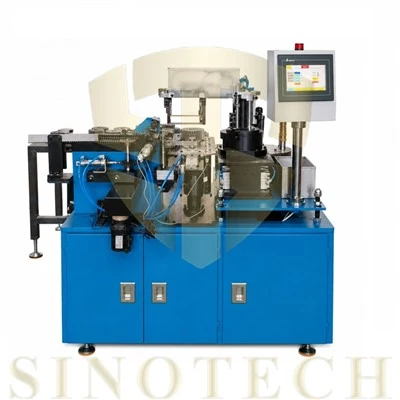
At the end of the day, the best protocol is the one that keeps your line running, doesn’t cause downtime, and is easy to fix when something goes wrong. I’ve seen too many clients buy the latest “top-tier” protocol just because it’s new, only to struggle with it when their line’s actual needs are super basic. That’s why we test every protocol we use in our own shop first—we run mini nail lines in our warehouse, beat them up with vibration, metal dust, all the stuff a real line goes through, to make sure the comms hold up.
Packaging Solution If you’re in the market for a new nail processing line, or looking to upgrade your existing one, the biggest thing to talk about is the comms setup. Don’t be shy to ask the supplier which protocols they use, why they chose them, and what kind of downtime you can expect. We’re always happy to walk through that, no sales pitch—just real talk about what works for nail lines. If you’re ready to chat about your specific needs, hit us up to talk through options that fit your production volume, your budget, and the kind of nails you’re making. Let’s build a line that doesn’t keep you up at night worrying about comms dropping.
References
- Hickman, J. (2021). Industrial Communication Protocols for Manufacturing Lines. Industrial Press.
- Bai, H., & Wang, L. (2020). Real-Time Communication in Precision Industrial Assembly. Journal of Industrial Informatics.
- MODBUS Organization. (2022). MODBUS RTU Specification Version 1.0. MODBUS Implementation Guide.
- ODVA. (2021). Ethernet/IP Protocol Overview for Industrial Applications. ODVA Technical Report.
- PROFIBUS & PROFINET International. (2022). PROFINET for Synchronized Motion Control. PI Application Note.
- OPC Foundation. (2021). OPC UA for Industrial IoT Integration. OPC Foundation Whitepaper.
Sinotech Fasteners Industry Co., Ltd.
With abundant experience, we are one of the most professional nail processing line manufacturers in China. Please feel free to buy customized nail processing line at competitive price from our factory. Welcome to contact us for quotation.
Address: No. 7, North of Bantang Avenue, Huashan Industrial Park, Chaohu Economic Development Zone, Hefei City, Anhui Province, China
E-mail: ryan@sinotechfasteners.com
WebSite: https://www.sinotech-fasteners.com/
